
Our Unfitted Kitchen: Just Like Mamaw’
Our Unfitted Appalachian Farmhouse Kitchen: Just Like Mamaw’s
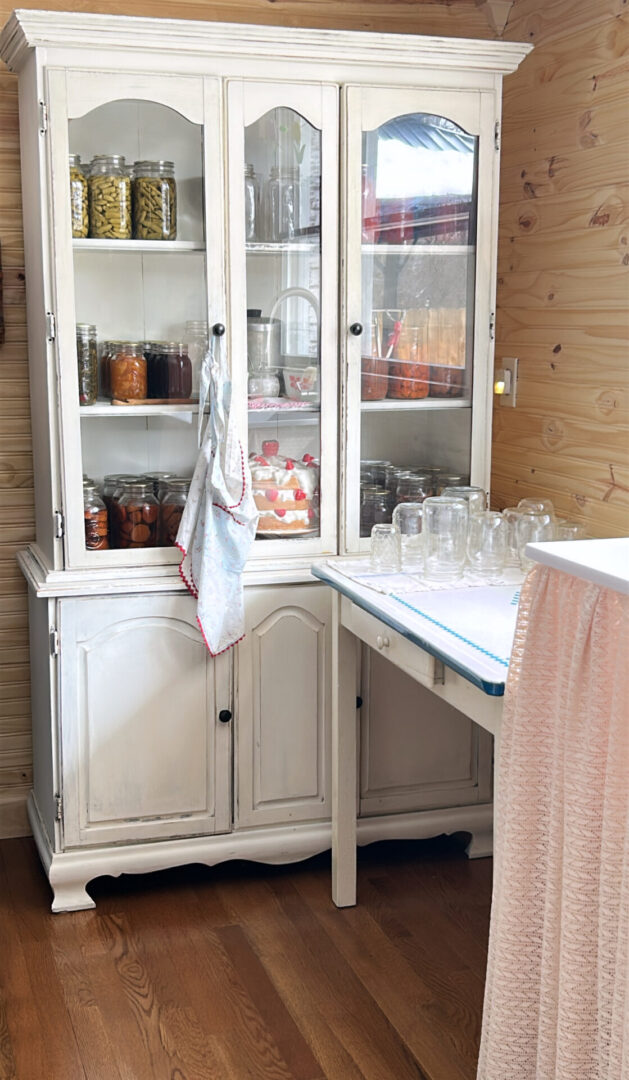
Mamaw’s kitchen was not just a showpiece to be looked at. It existed to be lived in. It held work and prayer and food and play all at the same time, without needing to separate those things into neat categories. Children came through it. Adults lingered in it. Life moved through that room from before daylight until after dark. It was the most used room in the house.
The cabinets in her kitchen were not fitted. They were unattached. They could be moved. And they were moved. You could clean under them. You could clean behind them. You could see what was going on around them instead of trusting that nothing bad was happening in places you could not see. That visibility was not a design choice. It was a philosophy.
Her upper shelves were open and kept neatly arranged, not for looks, but for use. The things she reached for most often sat closest to where she reached for them from. Nothing was placed randomly. Nothing lived somewhere just because it fit. The kitchen was arranged around how she actually cooked, not around how it would look to someone standing in the doorway.
She did not mix cake batter on her range top, so there was no reason for her mixer to sit near there. She did not fry fish on the Hoosier, so her crock of spatulas did not live by it. Things were kept where they belonged, not where they photographed well.
Our Kitchen Disaster
My kitchen died in January. We came home to hardwood floors bowed up from the ground — the first sign that something had been going wrong quietly for a long time. Many of you heard about it after the fact in our stories and on our feed.
That is what sealed, fitted cabinets do. They create spaces that never truly get cleaned because they are closed off. Toe kick spaces trap moisture against the floor. Base cabinets hide leaks until the damage is done. Dirt and damp are allowed to live quietly in places you cannot reach, and the design itself is what makes the concealment possible. What looks clean on the outside is often rotting underneath.
Standing in a room stripped down to framing and subfloor, we made a decision. Partly out of financial necessity and partly out of the clarity that only comes from losing something — we decided to rebuild using the pieces that had been passed down to us from the kitchens of our elders. Hoosiers. Hutches. China cabinets. Work tables. Enamel top tables. Pie safes. We had enough heirloom furniture to build a kitchen without a single fitted cabinet, and once we began setting those pieces in place it became clear, quickly and permanently, that we never want a fitted kitchen again. No matter where our finances land in the future.
Mamaw never experienced a kitchen disaster like mine. There was nowhere for water to hide. No closed-off base cabinets sealed tight to the floor. No toe kick spaces collecting moisture in the dark. If something leaked, she knew immediately. If something was damp, she found it. Problems did not grow quietly in the dark in her kitchen, and they do not grow quietly in mine anymore either.
How We Built It
The kitchen I have curated from those heirloom pieces is designed to be as functional as Mamaw’s was. I am paying close attention to how I move through the space, which tools I use, and where I am standing when I use them. My silverware drawer, which once lived near the range out of habit, now lives in the hutch by the dining table because that is where we actually reach for it. My dinnerware lives there too. Common sense placement over convenience of installation.
Everything in my kitchen must have a reason to be there and a home to live in. Nothing is tucked in wherever it fits. This single rule reduces the friction of daily cooking more than any gadget or renovation ever could. Lesser-used items live in the walk-in pantry. Seasonal pieces like the large turkey roaster live in the attic until they are needed. The kitchen belongs to what the kitchen is actually used for.
An unfitted kitchen requires that function serve as the focal point rather than decor. If it is not useful, it cannot live there. We are getting back to the reality of what a kitchen is and what it is for. When you see my kitchen, remember that beauty and aesthetic were never the goal. Functionality was. The beauty came all on its own, just the way it always does when something is built with purpose.
The Tools That Actually Live Here
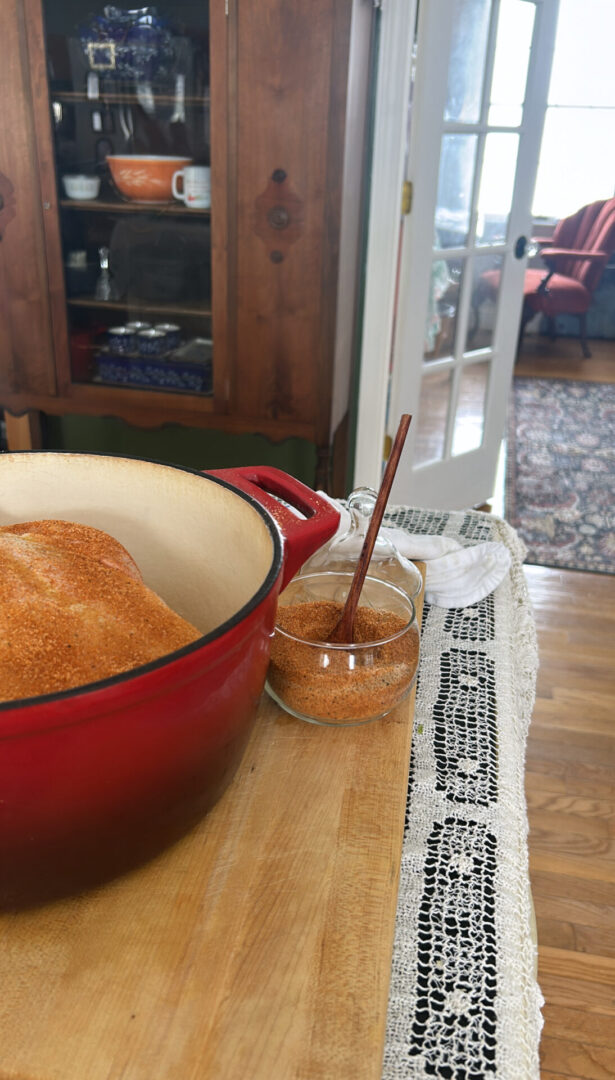
Every tool in this kitchen earns its place. These are not aspirational purchases or things that look good on a shelf. These are the workhorses of a kitchen that cooks real food every single day.
Cast iron skillets. We have used the same cast iron for decades. It goes from stovetop to oven, cleans easily, and will outlast every piece of nonstick cookware you have ever owned. [affiliate link to Lodge cast iron skillet]
Enamel coated cast iron dutch oven. For soups, stews, braises, and bread. Heavy, even heat, nothing sticks, nothing leaches. [affiliate link to enamel dutch oven]
Heavy bottom stainless steel pots. For canning, for stocks, for anything that needs steady even heat without reaction. Look for 3-ply or 5-ply construction. [affiliate link to stainless stockpot]
Good kitchen utensils. Quality matters more in your everyday tools than almost anywhere else in the kitchen. The things you reach for dozens of times a day should be worth reaching for. [Amazon list coming]
A Hoosier or hutch. This is the piece that changes a kitchen. Check estate sales, antique stores, Facebook Marketplace. They are out there and they are worth every bit of the search. Ours belonged to family. Yours is out there waiting for you.
The Permission You Did Not Know You Needed
I want to give you the same freedom this kitchen gave me. You do not have to renovate. You do not have to spend money you do not have. You do not need to match what you see on Pinterest or what your neighbor just put in.
Start where you are. Move the things that frustrate you. Put your tools where you actually use them. Take the doors off a cabinet if the closed-off space bothers you. Bring in a piece of furniture that works harder than your existing cabinetry does.
Mamaw did not have a kitchen designer. She had common sense, worn hands, and a clear idea of what a kitchen was supposed to do. That knowledge is not lost. It was just covered up for a generation or two by trends that prioritized appearance over function.
We are uncovering it again. And it looks a lot like home.